Decode Your VIN
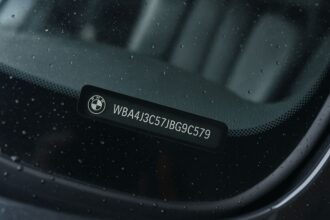
Enter your vehicle's VIN code to discover all technical specifications. The VIN consists of 17 alphanumeric characters.
Buying a stolen car can leave you out the entire purchase price plus the vehicle.
When law enforcement traces a stolen VIN to a registered owner, the vehicle is impounded and returned to the rightful owner, even if you bought it in good faith.
Before you hand over money for any used car, run a 60-second VIN check against the National Insurance Crime Bureau’s free database, plus a few common-sense physical checks.
This guide shows exactly how.
Quick answer
Three free ways to check if a vehicle has been reported stolen:
- NICB VINCheck at nicb.org/vincheck: free national database of stolen vehicles
- State DMV title status, free or low-cost in most states
- Local police non-emergency line: they will run a VIN against NCIC if you ask in person
Combine those with a free VIN decode to confirm the vehicle is what the seller claims.
The 60-second NICB stolen VIN check
The National Insurance Crime Bureau (NICB) is a non-profit funded by the auto insurance industry.
Their VINCheck tool searches a national database of vehicles reported stolen by participating insurance companies, covering more than 90 percent of US auto policies.
Steps:
- Go to nicb.org/vincheck
- Enter the 17-character VIN
- Submit (you can run up to five searches in 24 hours from one IP address)
Results show whether the vehicle has been reported as stolen but not recovered, or as a salvage / total-loss event tied to theft.
NICB is the most authoritative free database.
It does not cover 100 percent of theft events, small private insurers may not contribute, but it catches the vast majority.
Why a VIN decode also matters
Stolen vehicles are often re-VINed: the thief replaces the VIN plate with one from a similar legitimate vehicle that’s been totaled or scrapped.
NICB will return clean on the swapped VIN even though the actual vehicle is stolen.
A VIN decode catches this if:
- The decoded make, model, and year don’t match the vehicle in front of you
- The decoded engine code doesn’t match the engine in the vehicle
- The decoded plant code is inconsistent with the rest of the VIN (rare, but it happens)
If a decode shows a 2018 Toyota Camry but the vehicle is clearly a 2020 Honda Accord, walk away and report the seller.
Physical signs of a stolen vehicle
Even when paperwork looks clean, a thorough physical inspection often reveals issues. Watch for:
VIN tampering signs
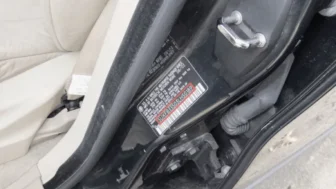
- Mismatched VIN plates. Compare the dashboard, door jamb, engine bay, and title VINs. They must all match exactly.
- Loose or improperly riveted VIN plate. OEM rivets are typically stainless and uniform. Replacement rivets often look slightly different.
- Scratched or sanded VIN. A worn dashboard VIN is normal. A scratched VIN with sanding marks or fresh metal is a red flag.
- Mismatched fonts between the dashboard VIN plate and the door-jamb sticker.
Documentation signs
- No title: the seller says “I’ll get you the title later.” Walk away.
- Title in someone else’s name. This is sometimes legitimate (parent selling for a child) but always requires scrutiny.
- Title from a state far from where the vehicle is being sold. Title washing happens across state lines. Out-of-state titles aren’t automatically fraudulent, but they warrant a state-by-state title-history check.
- Bill of sale only, no title. Most US states require a title. A bill-of-sale-only deal is a red flag.
Behavior signs
- Cash-only insistence with no paper trail
- Pressure to close fast (“another buyer is coming tonight”)
- Unwillingness to meet at a public DMV office for the transaction
- Refusal to provide the VIN before meeting
- Selling far below market value: 30/40% below comparable listings
A single red flag can be coincidence. Two or more, especially across categories, almost always means something is wrong.
State DMV checks
Each state DMV maintains its own title status database. Many offer a free public VIN lookup that shows:
- Whether the VIN is registered to a vehicle
- Title brand history (clean, salvage, rebuilt, etc.)
- Whether the title is currently active or has been reported stolen
Search “[your state] DMV VIN lookup” or check the state DMV website. Many states make this free for the public; a few charge a small fee.
If a state DMV reports the VIN as having no record at all, treat the vehicle as suspect.
A real, registered vehicle leaves a paper trail.
Asking police to run the VIN
Local police can run a VIN against the NCIC (National Crime Information Center) database, a federal law-enforcement database of stolen vehicles.
They will sometimes do this as a courtesy if you bring the vehicle to the station before purchase.
Call your local police non-emergency line, explain you’re considering buying a used car and would like the VIN checked. Most departments will accommodate this in person.
NCIC is more comprehensive than NICB but is not publicly searchable.
What to do if you suspect a stolen vehicle
- Do not pay the seller. The moment money changes hands, you become a victim alongside the original owner.
- Take a photo of the VIN, license plate, and seller’s documentation if you can do so safely.
- Walk away. Do not confront the seller.
- Call the police non-emergency line with the VIN and seller’s contact info.
- If you are in immediate danger or believe a crime is in progress, call 911.
Your tip can recover the vehicle for the rightful owner.
What if I already bought a stolen car?
If you discover after purchase that a car is stolen:
- Stop driving it. Driving a stolen vehicle, even unknowingly, can complicate the legal situation.
- Contact local police with the title, bill of sale, and seller’s contact info.
- File a police report as a theft victim (you are one!).
- Contact your auto insurance. Some comprehensive policies cover this scenario.
- Consult an attorney. A criminal-defense or consumer-protection attorney can help recover funds from the seller through civil action.
The vehicle itself will be returned to the rightful owner.
Recovering your money depends on whether the seller can be found and sued, most cannot.
How to bulletproof your next used-car purchase
- Get the VIN before meeting. A legitimate seller will share it.
- Run a free VIN decode: confirm specs match the listing.
- Run NICB VINCheck at nicb.org/vincheck (free).
- Check the state DMV title status by VIN.
- Run a salvage title check through NMVTIS.
- Inspect in person: match all VINs on the vehicle to the title.
- Pay via traceable means: cashier’s check or bank transfer, never cash for high-value vehicles.
- Transfer the title at the DMV with the seller present if your state allows it.
Five minutes of checks before signing protects you from years of legal headache.
Frequently asked questions
Is NICB VINCheck really free?
Yes. NICB VINCheck is funded by the insurance industry as a public service.
There are no fees and no account required. Limit is five searches per 24 hours per IP address.
Can I check if a car is stolen anonymously?
Yes. NICB VINCheck does not require any personal information. You enter only the VIN.
What happens if I unknowingly bought a stolen car?
The vehicle will be returned to its rightful owner. You generally cannot keep it.
You may have legal recourse against the seller through civil court, and some insurance policies cover this scenario, but recovery depends on the seller being identifiable and solvent.
Does a free VIN decoder show stolen status?
A pure VIN decoder shows factory specifications, not theft status.
To check theft status, use NICB VINCheck. To verify the decoded specs match the physical vehicle (which catches re-VIN scams), use VinDecoderPlus.com.
Are stolen cars more common in some states?
Yes. The NICB publishes annual “Hot Spots” reports. California, Texas, Florida, and Washington consistently top the list of states with the most vehicle thefts. Regardless of where you live, run the checks before any used-car purchase.
Decode and verify before you buy
→ Run your VIN through VinDecoderPlus
We decode the VIN, validate the check digit, surface NHTSA recalls, and confirm the factory specs match what you’re looking at.
The first line of defense before NICB and DMV checks.