Decode Your VIN
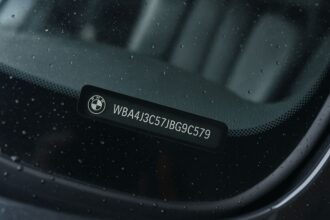
Enter your vehicle's VIN code to discover all technical specifications. The VIN consists of 17 alphanumeric characters.
Before 1981, every manufacturer used its own VIN format. Some had 11 characters, some had 13, some had 17 with completely different encoding.
There was no universal standard.
This makes decoding a classic car VIN harder than a modern one, but also more rewarding, because the codes carry detailed information about engines, body styles, and assembly plants that are often essential for parts ordering, restoration, and authentication.
This guide walks through pre-1981 VIN structures by manufacturer and decade.
Quick answer
- The 17-character VIN standard was introduced in 1981 under ISO 3779
- Pre-1981 VINs ranged from 11 to 17 characters depending on manufacturer
- Each manufacturer used its own encoding scheme, there is no universal table
- Position-by-position meaning depends on which manufacturer and which decade
- Modern VIN decoders (including VinDecoderPlus) work on post-1981 VINs only
For a pre-1981 vehicle, you’ll need to look up the manufacturer’s specific VIN format from that era. This page provides the major US manufacturers as a reference.
Why pre-1981 VINs are different
Until the late 1970s, vehicle identification was a manufacturer-by-manufacturer concern.
Ford, GM, Chrysler, and AMC each used their own format. Imports added more variation.
The shortest VINs, some 1950s and 1960s vehicles, used only 11 characters.
In 1981, NHTSA and ISO collaborated on a 17-character global standard (ISO 3779). Every manufacturer worldwide adopted it. Since then, the format has been universal.
The practical effect for restorers and used-car buyers: decoding a 1965 Mustang VIN is different from decoding a 1985 Mustang VIN, even though both are Mustangs.
Ford VINs, 1960–1980
1965–1972 Ford (Mustang, Falcon, Galaxie, F-100)
Ford used an 11-character VIN. Position by position:
- Position 1: Last digit of model year (e.g.,
5= 1965) - Position 2: Assembly plant code (single letter)
- Positions 3-4: Body code
- Position 5: Engine code
- Positions 6-11: Production sequence
Example: 5F08C123456 decodes as 1965, Dearborn assembly plant, 2-door fastback Mustang, 289 V8 engine, sequence 123,456.
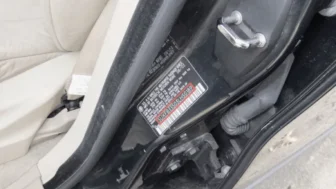
The VIN appears on a tag riveted to the driver’s-side door post (early 60s) or the dashboard visible through the windshield (mid-60s onward).
1973-1980 Ford
Ford expanded to a 13-character format in some years. The structure:
- Position 1: Model year
- Positions 2: Assembly plant
- Positions 3-4: Body code
- Position 5: Engine
- Positions 6-11: Sequence number
- Positions 12-13: Sometimes used for transmission or trim
A Ford-specific decoder is needed to translate body and engine codes for these years.
General Motors VINs, 1960–1980
1965-1971 GM (Chevrolet, Pontiac, Buick, Oldsmobile, Cadillac)
GM used a 13-character VIN for most divisions. Structure:
- Position 1: Division (1=Chevrolet, 2=Pontiac, 3=Buick, 4=Oldsmobile, 6=Cadillac)
- Positions 2-3: Series and body style
- Positions 4-5: Body type
- Position 6: Last digit of model year
- Position 7: Assembly plant
- Positions 8-13: Production sequence
Example: 124379N100001 is a 1969 Chevrolet Camaro, Norwood assembly plant, sequence 100,001.
1972-1980 GM
GM expanded to a 13-character VIN with a different layout to accommodate engine codes:
- Position 1: Division
- Positions 2-3: Series
- Positions 4-5: Body style
- Position 6: Engine code
- Position 7: Model year
- Position 8: Assembly plant
- Positions 9-13: Production sequence
The Camaro, Corvette, Trans Am, and other muscle cars from 1968-1972 are often verified using these VIN positions plus the cowl tag (a separate plate inside the engine bay) which carries paint codes, trim codes, and build date.
Chrysler/Dodge/Plymouth VINs, 1960-1980
1969-1980 Chrysler
Chrysler used a 13-character VIN with the following layout:
- Position 1: Car line (Plymouth, Dodge, Chrysler, Imperial)
- Position 2: Price class (Low, Medium, High, Special)
- Positions 3-4: Body type
- Position 5: Engine code
- Position 6: Model year
- Position 7: Assembly plant
- Positions 8-13: Production sequence
For a Hemi-equipped 1970 Plymouth Cuda, the engine code at position 5 will be R (426 Hemi).
The combination of body type, engine, and plant lets restorers verify whether a “Hemi Cuda” is genuine or a tribute build.
AMC VINs, 1960–1980
AMC (American Motors Corporation) used a 10-character VIN until 1968, then a 13-character VIN through 1980. The structure varies considerably by year. AMC vehicles include the AMX, Javelin, Gremlin, Pacer, and Eagle.
For AMC verification, the VIN alone is rarely enough. Restorers also rely on:
- The trim tag on the door jamb
- The engine block stamping
- Original build sheets when available
Imports | pre-1981
European and Japanese manufacturers used a wide range of VIN formats before 1981. A few examples:
- Volkswagen Beetle (Type 1): 9-character chassis number stamped on the spare tire well and frame tunnel
- Porsche 911 (1965-1973): 6-digit chassis number plus model code prefix
- Mercedes-Benz (1960s-1970s): 14-character chassis number with model code
- BMW (pre-1981): 7-digit chassis number stamped on a plate
- Toyota/Nissan/Honda (pre-1981): Manufacturer-specific 5-10 digit chassis numbers
For specific imports, consult the manufacturer’s classic-car archive or a marque-specific registry.
Where to find a pre-1981 VIN
Pre-1981 VINs are not typically on the dashboard visible through the windshield.
Locations vary by manufacturer and year:
- Ford 1960s: Driver’s-side door post or door jamb sticker; later years moved to dashboard
- GM 1960s: Driver’s-side dashboard plate (visible through windshield in later 60s); also on the cowl tag inside the engine bay
- Chrysler 1960s-1970s: Dashboard plate, driver’s side
- AMC 1960s-1970s: Driver’s-side door post and engine block
The firewall stamping and the engine block stamping are critical for authentication of high-value classics. A vehicle whose firewall VIN doesn’t match its dashboard tag is either a re-shelled car or a fraudulent build.
Why classic VIN verification matters
For collectible vehicles, the VIN determines the vehicle’s value. A genuine 1969 Camaro Z/28 is worth multiples of a 1969 base Camaro that’s been modified to look like a Z/28.
Authentication relies on:
- The VIN matching the build documents (Protect-O-Plate, Window Sticker, Build Sheet)
- The engine code in the VIN matching the actual engine block stamping
- The cowl tag or trim tag matching the VIN’s body and trim codes
- The assembly plant code being consistent with documented production records
Many Mecum and Barrett-Jackson auction listings for muscle cars include the VIN decoded position-by-position for exactly this reason.
Tools and resources
For specific brand registries:
- Ford/Mustang: Marti Auto Works (martiauto.com) provides authentic build reports for any Ford vehicle from 1967 onward
- GM/Chevrolet: Pontiac Historic Services and the Camaro Research Group maintain build documentation
- Chrysler/MOPAR: Galen Govier Auto Research has decoded thousands of MOPAR VINs and produced certification reports
- Porsche: Porsche Klassik archive
- Mercedes-Benz: Mercedes-Benz Classic Center
For modern VIN decoding:
VinDecoderPlus.com decodes any 1981-or-later VIN free, with full specs and recall lookup.
Pre-1981 VINs require manufacturer-specific reference tables.
Frequently asked questions
Why doesn’t VinDecoderPlus decode my 1968 Mustang VIN?
The 17-character VIN standard was introduced in 1981. Pre-1981 vehicles used manufacturer-specific formats with no universal decoding scheme. Modern decoders, including VinDecoderPlus, operate on the post-1981 standard only. For pre-1981 vehicles, consult the brand’s classic-car registry.
How long was a 1969 VIN?
It depended on the manufacturer. Ford used 11 characters, GM and Chrysler used 13.
Imports varied even more widely. The 17-character standard came in 1981.
Can a pre-1981 vehicle have a salvage title?
Yes. State DMV title brands are not tied to VIN format. A pre-1981 vehicle can be branded salvage, rebuilt, junk, or any other state-defined brand.
How do I verify a classic car is authentic?
Use the VIN, the engine block stamping, the cowl tag (or trim tag), and any original build documentation (window sticker, build sheet, Protect-O-Plate). All four should agree.
If they don’t, the vehicle has been modified, and the modification needs to be documented before resale.
Are classic VIN decoders available online?
Yes, but they are typically brand- and decade-specific. There is no universal pre-1981 decoder because there was no universal pre-1981 standard. Brand registries and marque clubs maintain the most accurate decoding tables.
Decoding a modern vehicle?
For any vehicle manufactured 1981 or later, our decoder handles every position automatically and surfaces NHTSA recalls in one step.