Decode Your VIN
Enter your vehicle's VIN code to discover all technical specifications. The VIN consists of 17 alphanumeric characters.
Every character in a Vehicle Identification Number carries a precise piece of information.
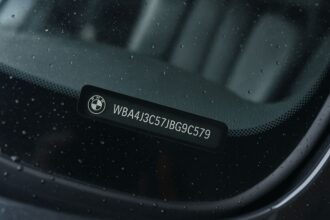
The 17 characters are not random, they encode where the vehicle was built, who built it, what model year it is, what engine it has, and a unique production serial number. Once you know which position carries which fact, the VIN reads like a passport.
This page is a position-by-position reference. Skim the tables, look up your specific character, or run your VIN through our free decoder for an instant breakdown.
The fast version
- Position 1: Country where the vehicle was built
- Positions 2–3: Manufacturer
- Positions 4–8: Model, body style, restraints, transmission, engine
- Position 9: Check digit (math validation)
- Position 10: Model year
- Position 11: Assembly plant
- Positions 12–17: Production serial number
The 17-character format was standardized globally in 1981 under ISO 3779 and is enforced in the United States by the National Highway Traffic Safety Administration (NHTSA).
Position 1 — Country of origin
The first character is the country (or region) where the vehicle was assembled.
| Character | Region |
|---|---|
| 1, 4, 5 | United States |
| 2 | Canada |
| 3 | Mexico |
| 6 | Australia |
| 9 | Brazil |
| J | Japan |
| K | South Korea |
| L | China |
| S | United Kingdom |
| T | Switzerland / Czech Republic |
| V | France / Spain |
| W | Germany |
| Y | Sweden / Finland |
| Z | Italy |
Note: Position 1 reflects where the vehicle was built, not where the brand is headquartered. A BMW assembled in Spartanburg, South Carolina starts with 5, not W.
Positions 2–3 — Manufacturer
These two characters, combined with position 1, form the World Manufacturer Identifier (WMI). Every manufacturer that builds more than 500 vehicles a year has a unique WMI assigned by SAE International.
A few examples:
| WMI | Manufacturer |
|---|---|
| 1G1 | Chevrolet (USA) |
| 1G6 | Cadillac (USA) |
| 1FA | Ford passenger car (USA) |
| 1FT | Ford truck (USA) |
| 2T1 | Toyota Canada |
| JHM | Honda Japan |
| JTD | Toyota Japan |
| JN1 | Nissan Japan |
| KMH | Hyundai South Korea |
| WBA | BMW passenger car |
| WDB | Mercedes-Benz |
| WAU | Audi |
| WP0 | Porsche |
| WV1 | Volkswagen commercial |
Decode any VIN here to see the WMI translated automatically.
Positions 4–8 — Vehicle Descriptor Section (VDS)
These five characters describe the vehicle.
Each manufacturer assigns its own meaning, but the categories follow a common pattern:
- Position 4: model, platform, or series
- Position 5: body style or restraint system
- Position 6: engine series or trim
- Position 7: drive type (FWD, RWD, AWD, 4WD), or GVWR class for trucks
- Position 8: specific engine code
Brand-specific tip: On Ford vehicles, position 8 is almost always the engine code. On General Motors, it is also typically the engine. On BMW, position 8 commonly identifies the body and engine combined. The VinDecoderPlus tool handles each manufacturer’s encoding automatically.
Position 9 — The check digit
Position 9 is the most important single character in a VIN: it is a calculated check digit that validates the rest of the code.
The check digit is computed by:
- Converting each non-numeric character to a number using a fixed table
- Multiplying each by a position-specific weight
- Summing the products
- Taking the result modulo 11
If the remainder is 10, the check digit is the letter X. Any other remainder is the digit itself (0–9).
If position 9 doesn’t match the calculation, the VIN is invalid — either mistyped or fraudulent. This is why every VIN decoder, DMV, and insurance company runs the check-digit math before trusting a VIN.
Position 10 — Model year
The single character at position 10 maps to a model year. The mapping repeats every 30 years.
| Char | Year (1st cycle) | Year (2nd cycle) |
|---|---|---|
| A | 1980 | 2010 |
| B | 1981 | 2011 |
| C | 1982 | 2012 |
| D | 1983 | 2013 |
| E | 1984 | 2014 |
| F | 1985 | 2015 |
| G | 1986 | 2016 |
| H | 1987 | 2017 |
| J | 1988 | 2018 |
| K | 1989 | 2019 |
| L | 1990 | 2020 |
| M | 1991 | 2021 |
| N | 1992 | 2022 |
| P | 1993 | 2023 |
| R | 1994 | 2024 |
| S | 1995 | 2025 |
| T | 1996 | 2026 |
| V | 1997 | 2027 |
| W | 1998 | 2028 |
| X | 1999 | 2029 |
| Y | 2000 | 2030 |
| 1 | 2001 | 2031 |
| 2 | 2002 | 2032 |
| 3 | 2003 | 2033 |
| 4 | 2004 | 2034 |
| 5 | 2005 | 2035 |
| 6 | 2006 | 2036 |
| 7 | 2007 | 2037 |
| 8 | 2008 | 2038 |
| 9 | 2009 | 2039 |
Because the same character maps to two different years, you need position 7 to disambiguate cycles. Per NHTSA convention, position 7 is a digit for years 1980–2009 and a letter for years 2010 and later.
Position 11 — Assembly plant
The 11th character identifies the specific factory where the vehicle was built. Each manufacturer maintains its own plant code list. A single character of difference can mean a vehicle built in Marysville, Ohio versus Suzuka, Japan — useful for parts compatibility, since plants sometimes use different suppliers.
Positions 12–17 — Serial number
The final six characters are the production sequence number. Together with the previous 11 characters, they make the VIN globally unique.
For high-volume models, sequence numbers approach the millions over the model’s lifetime. For limited-production vehicles such as the Ford GT or Bugatti Chiron, the serial number is often used as a collector identifier.
What the VIN does not tell you
Despite their density, VINs leave several attributes off the record:
- Color — set on the build sheet, not the VIN
- Most options and packages — recorded by build sheet
- Current ownership — recorded by the state title authority
- Mileage — recorded by inspection records and reported to NMVTIS
- Accident history — reported to insurance and history-report providers
For all of those, you need a vehicle history report in addition to a VIN decode.
Letters never used
The letters I, O, and Q are excluded from every VIN. They look too similar to the digits 1 and 0. If your supposed VIN contains any of these letters, it is either mistyped or not a real VIN.
Decode any VIN free
Reading a VIN by hand is satisfying once, but if you decode VINs regularly (used-car shopping, fleet management, parts ordering, or insurance work) use the free VinDecoderPlus tool.
It handles every position automatically, validates the check digit, and cross-references the NHTSA recall database in one step.
FAQ: Frequently asked questions
What does the 9th character of a VIN mean?
The 9th character is the check digit. It is a calculated value that validates the rest of the VIN. If you change any other character, the check digit will no longer match. DMVs, insurance companies, and VIN decoders all use this digit to detect mistyped or fraudulent VINs.
What does the 10th character of a VIN mean?
The 10th character is the model year. Letters and digits map to specific years on a 30-year cycle.
For example, R is 2024 and S is 2025. Position 7 disambiguates which cycle a year belongs to.
What does the 11th character of a VIN mean?
The 11th character identifies the assembly plant where the vehicle was built. Each manufacturer maintains its own list of plant codes.
Why are I, O, and Q never used in a VIN?
They are excluded to prevent confusion with the digits 1 and 0. Under ISO 3779, the alphabet used in VINs is restricted to the 23 letters that cannot be visually mistaken for numbers.
Can I tell from a VIN whether a car was made in the US?
Yes. If position 1 is 1, 4, or 5, the vehicle was built in the United States. Country of manufacture may differ from country of brand — many Japanese and German brands assemble vehicles in the US.