Decode Your VIN
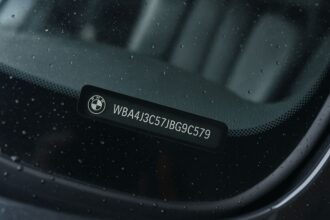
Enter your vehicle's VIN code to discover all technical specifications. The VIN consists of 17 alphanumeric characters.
A safety recall means the manufacturer or NHTSA has identified a defect that creates an unreasonable risk to safety.
According to NHTSA, roughly one in four used vehicles on US roads has at least one unrepaired open recall. The fix is almost always free at any franchised dealer of that brand — but only if you know the recall exists. A 30-second VIN check is enough to find every open recall on a vehicle.
This guide walks through every free way to run a recall check by VIN, what each recall category means, and what to do if your vehicle has one open.
Quick answer
Three free ways to check open recalls by VIN:
- NHTSA recall lookup at nhtsa.gov/recalls, the federal database
- Manufacturer site: search “[brand] recall lookup VIN” (every major manufacturer offers this free)
- VinDecoderPlus at vindecoderplus.com: instant decode plus an automatic NHTSA recall cross-reference
For peace of mind, run all three. They draw from overlapping but not identical data sources.
How to check NHTSA’s recall database
NHTSA maintains the most authoritative recall database in the United States. To use it:
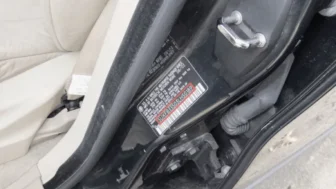
- Locate your 17-character VIN (dashboard, door jamb, or registration card)
- Go to nhtsa.gov/recalls
- Enter the VIN in the search box
- The page returns every open recall plus historical recalls that have already been completed
NHTSA’s database is updated daily. If a recall was issued in the last 24 hours, it should appear here first.
What recall results actually mean
When you run a recall check, you’ll see one of three statuses for each issue:
- Incomplete (open): The recall exists and the vehicle has not yet been repaired. Take action.
- Complete (closed): The recall was issued, and this VIN has had the repair performed. No action needed.
- No open recalls: No safety defects have been declared on this vehicle. This is the goal.
Recalls also vary in severity. NHTSA categorizes them by the affected component:
- Airbags: among the most serious; defective airbags can fail to deploy or deploy with too much force
- Steering & suspension: loss of control risk
- Brakes: stopping distance or sudden brake failure
- Fuel system: fire risk
- Electrical: anything from minor light failures to ignition switch failures
- Powertrain: engine or transmission defects
- Seat belts: restraint failure in a crash
A vehicle with a single open recall on a non-critical electrical component is far less concerning than one with an open airbag or brake recall.
How to fix a recall (it’s free)
Manufacturer recall repairs are free under federal law, there is no copay, deductible, or expiration date for safety recalls in most cases. Once you confirm a recall exists:
- Call any franchised dealership of that brand (not an independent shop)
- Provide your 17-character VIN
- Schedule a service appointment
- Bring the vehicle in and have the repair performed
Most recalls are completed in a single visit. Some, like complex airbag inflator replacements, may require parts to be ordered. Loaner cars are sometimes provided for extended repairs.
You do not have to be the original owner or have purchased the vehicle from that dealership. Any franchised dealer of the brand must perform the recall repair regardless of where you bought the vehicle.
What if my vehicle is older?
Most recalls have no expiration. A 1998 vehicle with an open Takata airbag recall is still eligible for free repair in 2026. The NHTSA’s authority to enforce recalls does not lapse based on vehicle age.
The major exception: if the manufacturer has gone out of business (e.g., Saturn, Pontiac, Oldsmobile), some recalls may not be repairable by an active dealer. In those cases, NHTSA may coordinate with the parent company that absorbed the brand. For example, GM still services Pontiac and Oldsmobile recalls through Chevrolet/GMC dealers.
Famous recalls worth knowing
Takata airbag recall
The largest recall in US automotive history. Defective Takata airbag inflators can rupture, sending shrapnel into the cabin. The recall covers more than 67 million airbags across 19 manufacturers and continues to expand. Models from Honda, Toyota, Acura, BMW, Ford, and others are affected. If your vehicle has any mention of Takata in its recall history, get it fixed immediately.
GM ignition switch recall
A defective ignition switch in 2.6 million GM vehicles (Chevy Cobalt, Saturn Ion, and others) could shift out of the Run position while driving, disabling power steering, brakes, and airbags. Linked to over 100 deaths. Repaired free at GM dealers.
Ford Pinto fuel tank recall
A historical case of a known defect that should have been recalled earlier. Cited in Ford’s settlements and a major reason NHTSA’s enforcement framework exists today.
Toyota unintended acceleration recall
Affected over 9 million Toyota and Lexus vehicles in the late 2000s, leading to floor-mat redesigns and accelerator-pedal redesigns. Free recall repairs continued for over a decade.
Why used-car buyers should always check recalls
NHTSA estimates that one in four used vehicles in the US has at least one unrepaired safety recall. When you buy a used car:
- The previous owner may not have repaired the recall.
- Dealers selling used cars are not required by federal law to repair recalls before sale though some states have laws that say otherwise.
- The recall remains on the VIN forever until the repair is performed.
- Insurance can be affected: some insurers ask about open recalls when issuing collision coverage.
Always run a recall check before signing on a used vehicle.
If a recall exists, either negotiate the price down to reflect the inconvenience, or insist the seller fix it before transfer.
How VinDecoderPlus handles recalls
When you decode a VIN at VinDecoderPlus, the tool:
- Validates the VIN check digit
- Decodes the make, model, year, engine, and factory options
- Cross-references the VIN against the NHTSA recall database
- Surfaces every open recall with reference number, affected component, and remedy
Free, no sign-up, results in under five seconds.
Frequently asked questions
How much does a recall repair cost?
Recall repairs are free. Under federal law, the manufacturer covers all parts and labor for safety recalls performed at a franchised dealership of that brand.
Do recalls expire?
Most do not. Safety recalls remain open indefinitely until the repair is performed on each individual VIN. There are rare exceptions for emissions or non-safety service campaigns, but standard NHTSA safety recalls do not expire.
Can I sell a car with an open recall?
Yes, but disclosure is best practice and required by law in some states (notably California). The buyer can have the recall repaired free at any dealer after the sale.
Can I drive a car with an open recall?
In most cases yes, but it depends on the severity. For “do not drive” recalls — usually involving airbags or fire risk — NHTSA explicitly recommends parking the vehicle until repaired. The recall notice will state if this applies.
How do I know if my vehicle has been recalled?
Manufacturers send recall notices to the registered owner via mail. If you bought used or moved recently, you may not get the notice. The only reliable way to check is by VIN at nhtsa.gov/recalls or VinDecoderPlus.
Decode + recall check now
→ Run your VIN through VinDecoderPlus
Free decode + automatic NHTSA recall cross-reference. No sign-up. Results in seconds.